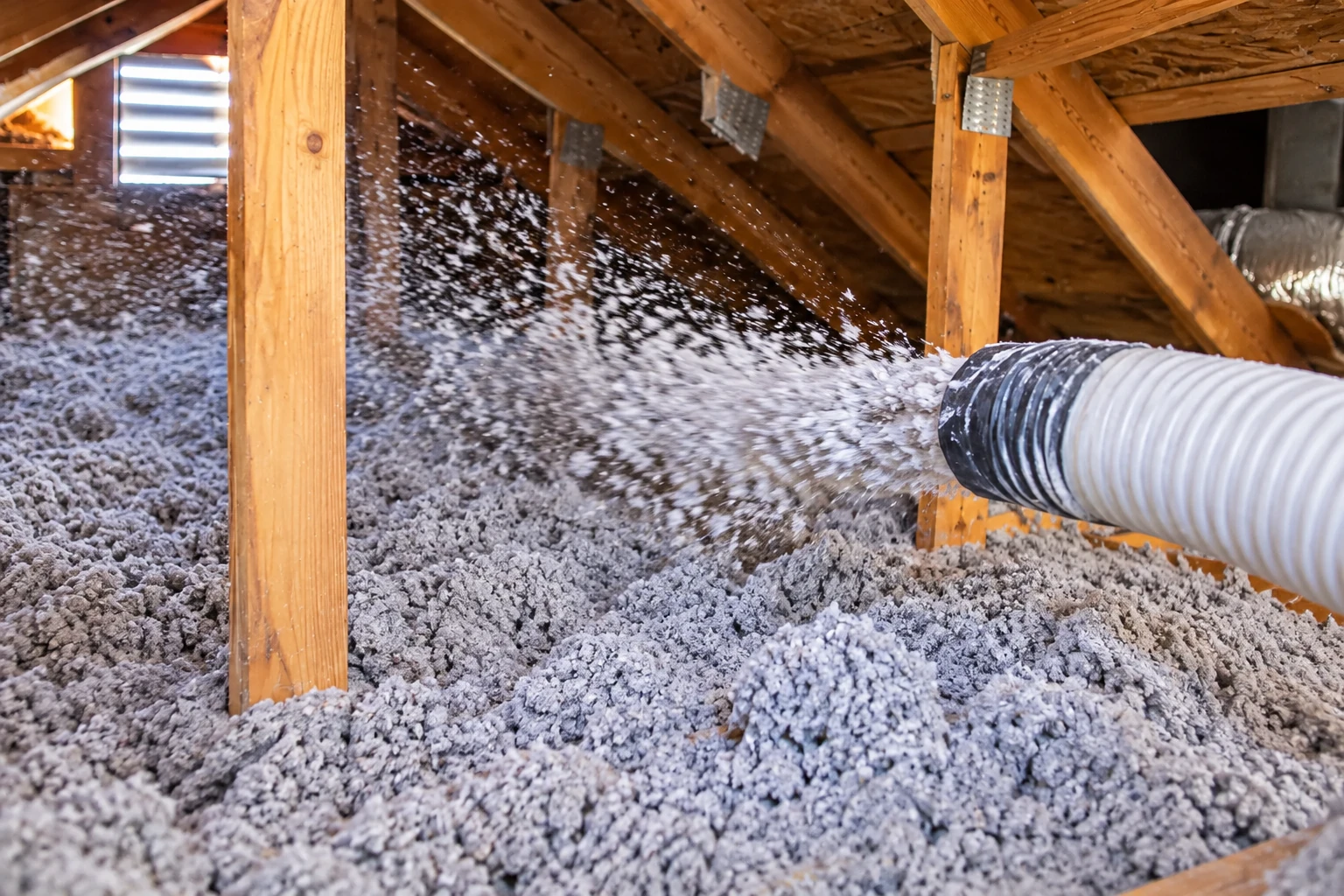
Basement insulation in Memphis TN - a basement that stays warmer and drier
Cold, musty basement walls or damp air down there? We deal with the moisture first, then insulate so the space stays warmer and drier.
What does insulating my basement walls actually fix?
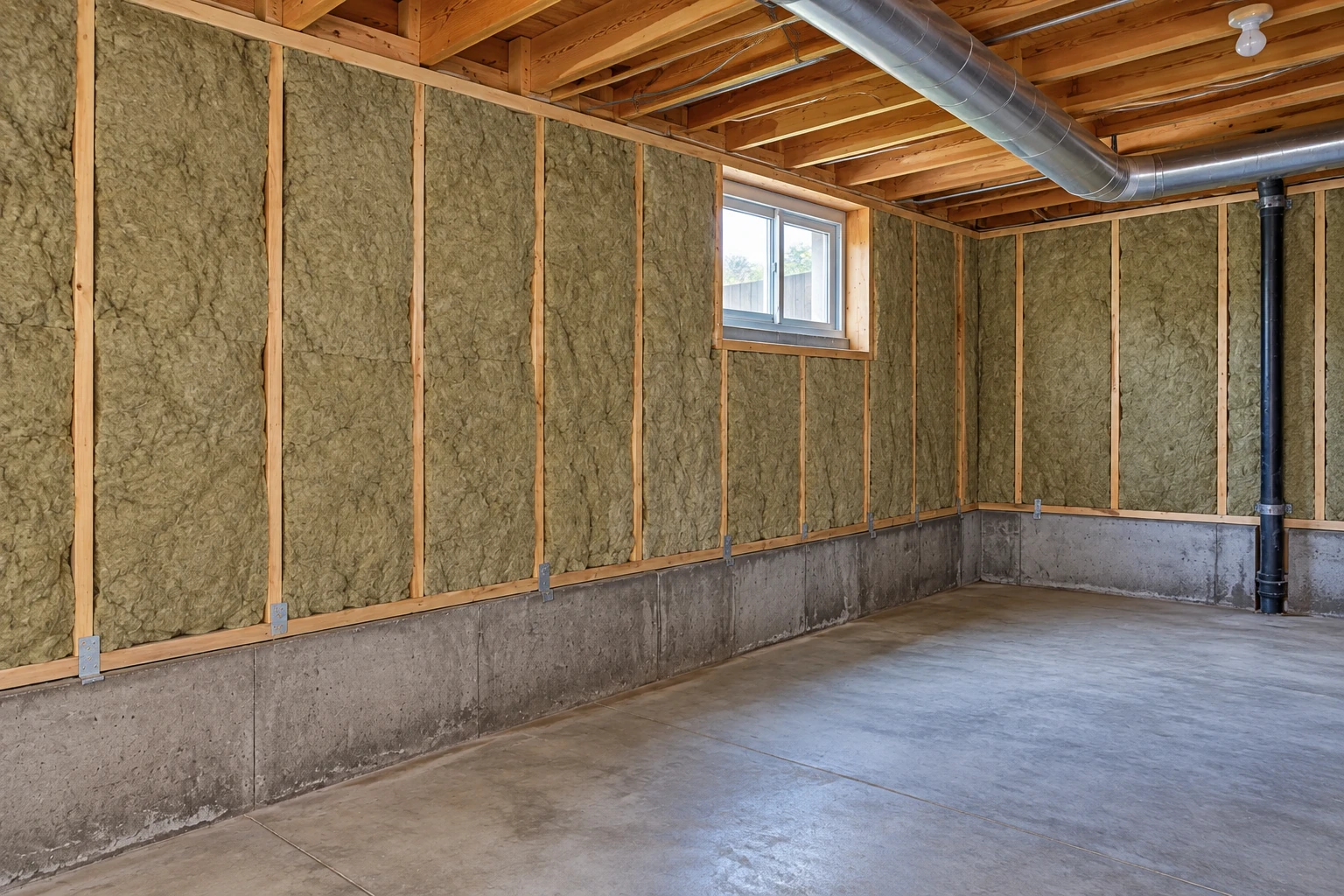
Basement insulation in Memphis goes on the inside of your foundation walls, and it usually keeps the space warmer and drier through our humid summers, because cool basement air runs damp and that's where mold and musty smells get started.
Most calls start with a smell, a cold floor upstairs or a dehumidifier that never shuts off. The price mostly comes down to how much wall there is, which material suits your walls, whether the rim joist gets done too and how you plan to finish the room. The schedule turns on how dry the walls are, since a basement that takes on water needs that fixed before we start, and on how much has to be moved away from the walls. If somebody already hung fiberglass down there and it smells, we may start with insulation removal. I come out, look at the walls and give you the figure for your basement on site.
How we do basement insulation
Before we talk materials, I ask about water. I want to know whether the walls ever look wet, where your downspouts empty and whether the floor has ever had standing water, because insulation over a wet wall only hides the problem. If water's getting in, that gets fixed first, and I'll tell you plainly if it's work for someone other than us. Then our installers seal the air leaks, starting at the rim joist, the band of framing that sits on top of the foundation wall, along with gaps where pipes and wires come through. After that the walls get insulation that won't soak up water, fitted tight so damp air can't get behind it. We clean up and walk the basement with you at the end.
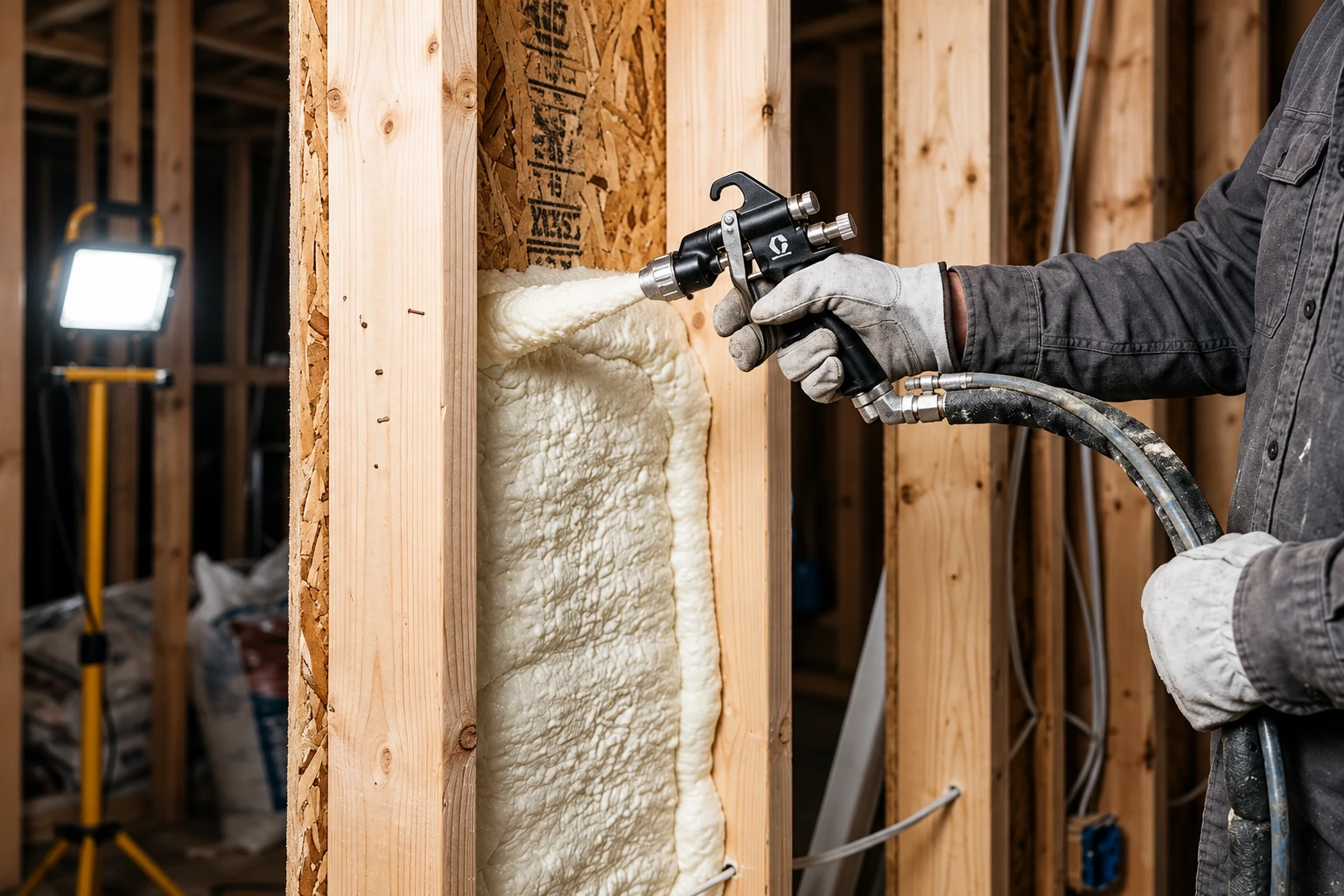
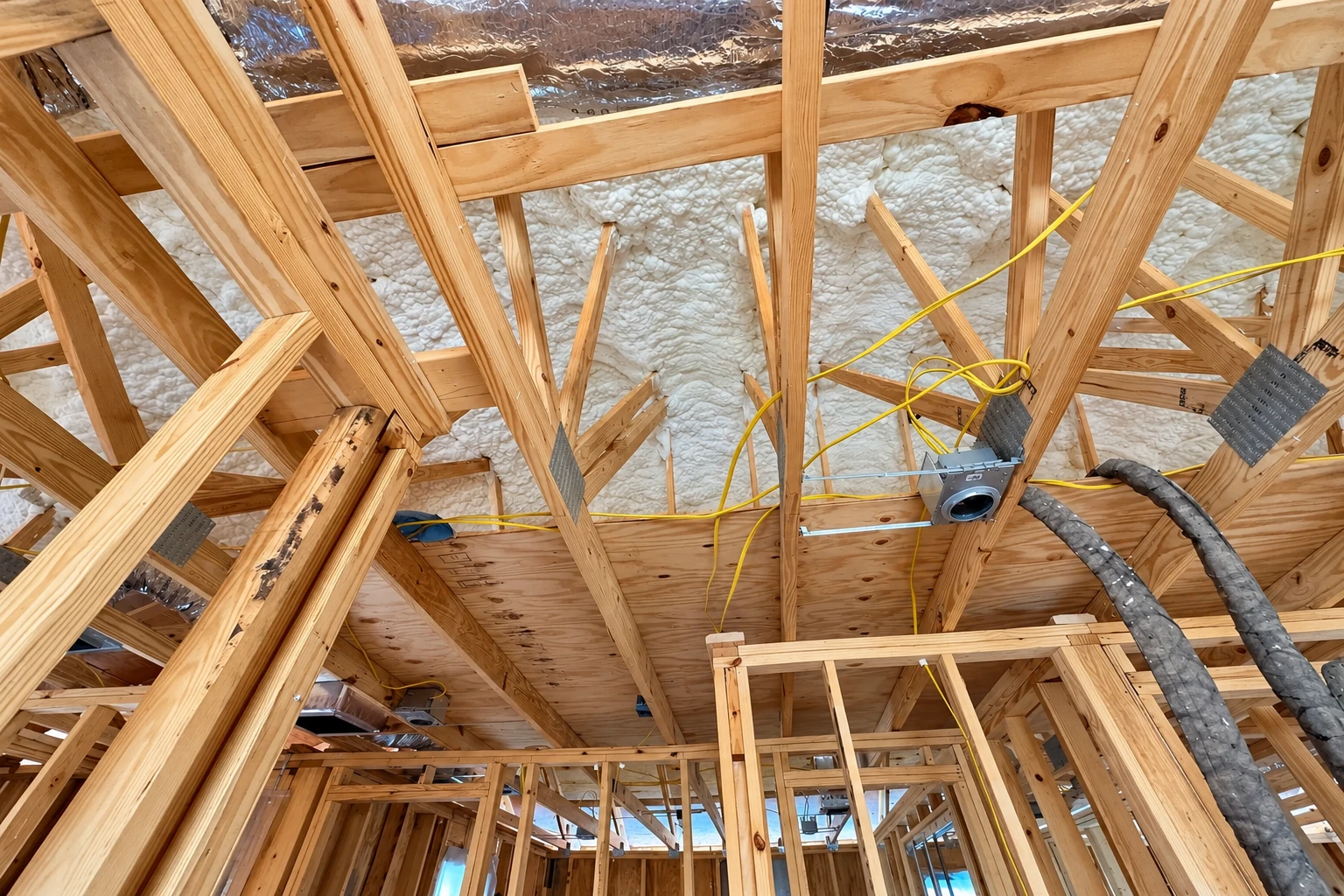
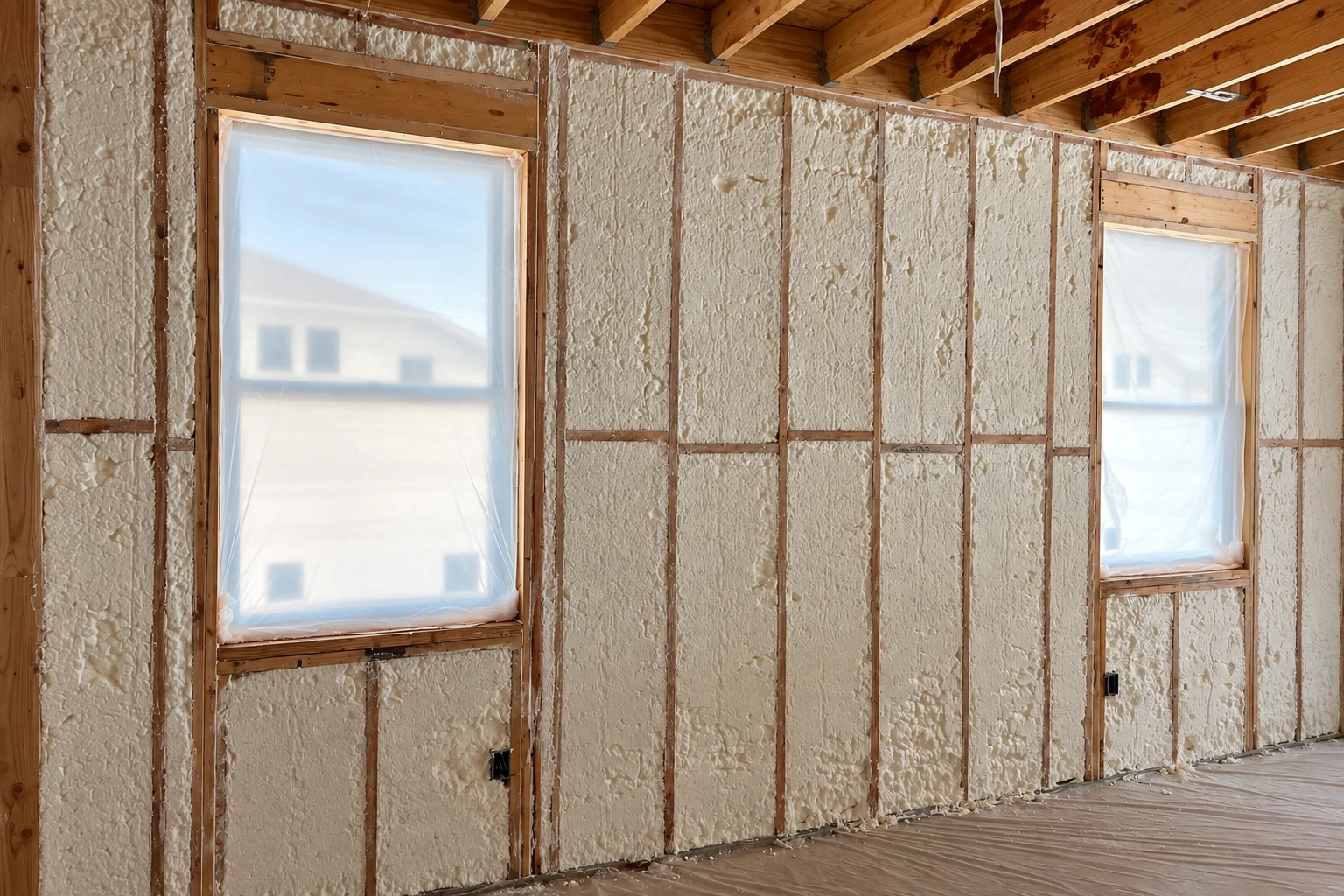
Most basement walls do best with closed-cell foam insulation, dense foam that blocks moisture and stops air in the same pass, and when the walls are rough or you're finishing the room, I'd pay for it. Open-cell foam insulation is softer and costs less, and it does good work in attics and upstairs walls, but it takes on water, so I don't put it against a foundation.
Closed-cell spray foam on the walls
This suits most basements, especially rough or uneven block walls and rooms you plan to finish, because it gives the best moisture control you can put on the inside of a foundation wall and seals air leaks as it goes on. It costs more than board, and it has to be covered with ignition-barrier paint, a fire-resistant coating, or drywall, so plan for that layer in the budget.
Rigid foam board, glued tight
Board suits flat, even walls and a tighter budget, since it costs less to put up than spray foam. It only does its job when it's stuck to the wall with no air gap behind it and every seam and edge is sealed with caulk or foam, so that's the part to check on any bid.
Basement insulation permits and conditions in Memphis
Building permits here come from Construction Enforcement, the office that issues construction permits and inspects building work for Memphis, Arlington, Germantown, Lakeland, Millington and unincorporated Shelby County. It reviews plans and inspects parts of a house as well as new buildings, so basement work can fall under it. I don't assume a basement job is exempt. I check with that office for your address, and when a job calls for a permit, we handle the application and set up the inspections, the same way we do on jobs in Germantown and Lakeland.
Basements aren't on every street here, and the ones we see are often under older homes, with a dehumidifier running all summer and a musty smell that comes back every year. We're based in Memphis and work across the cities around it in Tennessee, Mississippi and Arkansas, and that summer damp is the first thing I look at wherever the house is.
What basement insulation looks like
Why call us for basement insulation
I give the estimate myself
I come out to look at your basement and price it myself, and our installers do the work. The person who looked at your walls is the one who explains the number.
Gas equipment checked before sealing
I spent years in heating and cooling before I started this business in 2021, and a lot of basements hold the furnace or water heater. Before we tighten the space up, I make sure that equipment still gets the fresh air it needs to burn safely.
Licensed and insured for basement work
We're licensed and insured. That protects you and your house while our installers are working downstairs.
Work planned for code inspection
When basement work here is permitted, the permit office checks it against the state's building code, so we plan the sealing and the foam's covering to that standard from the start. An inspection shouldn't be the first time anyone looks hard at the job.
Down there, everything comes back to water, so the walls have to be dry and sealed before anything covers them. Use our contact page or call (901) 203-1514, and I'll set a time to come look.
(901) 203-1514Get an on-site estimate for your basement
We reply to every call and form within one business day. I'll set a time to come out, look at your walls and give you a free estimate on site with no obligation, and if you go ahead, our installers do the work.
Memphis basement insulation questions
How much does basement insulation cost in Memphis?
Insulating a basement across the US usually costs about $4.40 to $6.40 per square foot, and that's a national figure, not a Memphis quote. Your material, the rim joist and how the wall gets finished move your number, and any water fix comes on top. I give you the figure for your basement after I've seen it.
Is fiberglass fine against basement walls?
Usually not. Fiberglass or cellulose against a basement wall can soak up a lot of moisture and stay damp for good, and plastic sheeting over it makes that worse by trapping the water in the wall. That's why we use foam on foundation walls instead of batts.
What needs to happen before basement insulation goes in?
Rain and groundwater need to drain away from the foundation, and the air leaks need to be sealed, before any insulation goes up. Those two things decide whether the basement stays dry. If yours takes on water now, that's the first job, and I'll tell you so at the estimate.
What is the best way to insulate basement rim joists?
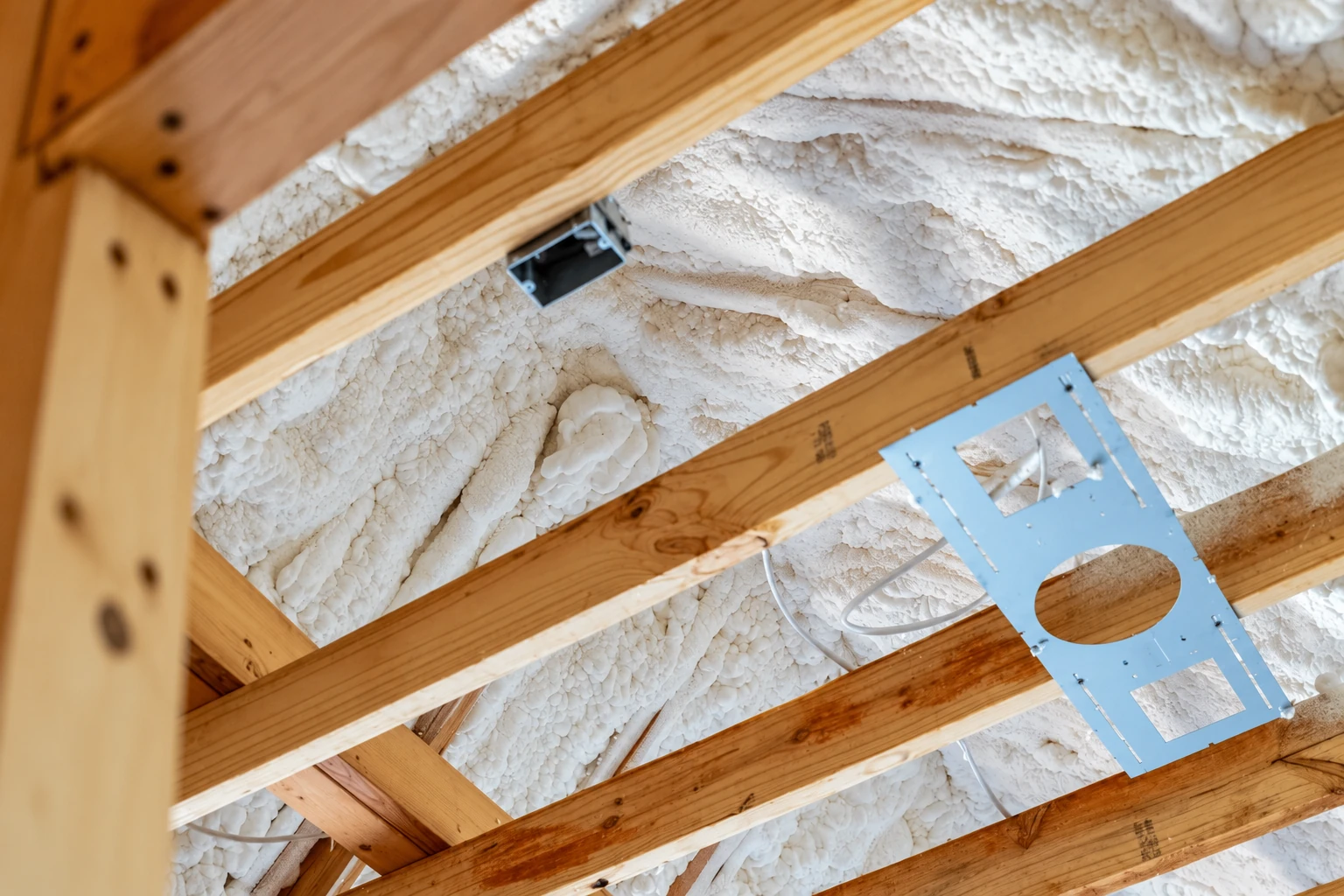
Spray foam is the simplest, since it air-seals and insulates the rim joist in one step. Rigid foam cut to fit each space between the joists also works, as long as the edges are sealed with caulk or spray foam so air can't slip around it. It's worth doing with the walls, because that band is often one of the leakiest spots in a basement.
Should I insulate my basement walls or the basement ceiling?
For most Memphis basements, insulate the walls. The usual guidance saves ceiling insulation for homes in a dry climate where the basement won't be lived in, and our summers are anything but dry. Insulating the walls also keeps the furnace, ducts and pipes down there inside the warm part of the house.
How do I keep basement walls from trapping moisture after insulating?
Skip finishes that seal the wall shut. Vinyl or foil wallpaper and epoxy, oil or alkyd paint on the inside of basement walls trap moisture in the wall. Ask us what you're planning to put on the walls before you buy anything, and we'll tell you what works over the foam or drywall.
Book an on-site estimate for basement insulation
Call (901) 203-1514 or send the form with your wall square footage and any damp spots, so I know what to check.